
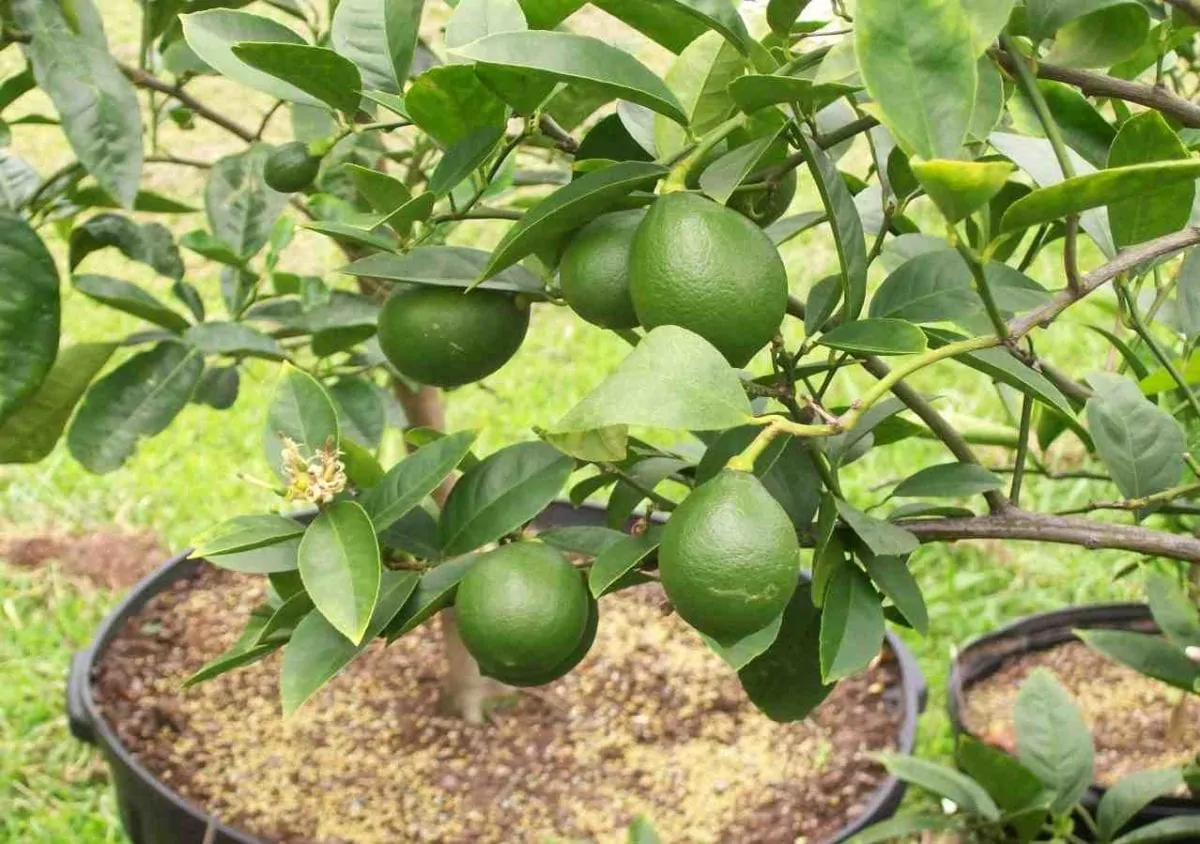
Lemons are one of the most popular of the citrus families. They can be used in desserts, beverages, dinners, and appetizers. Growing them indoors can be tricky, but if you know what they need and can supply it, you will do fine. So, if you want to learn more about lemon tree care, I’m at your disposal!
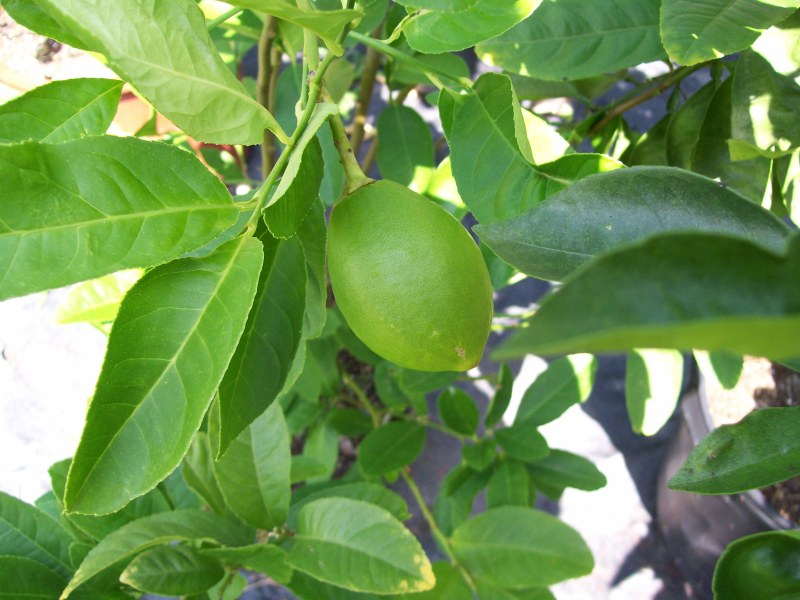
Lemon trees need, what is called, full sun. Full sun is 8 or more hours a day. Just because the sun is shining on it when you leave in the morning, it does not mean that it is in full sun. The bare minimum would be 6 hours. Though, with that few hours, your fruit production will be much lower than is possible, if at all, for that plant. Your tree will also not be able to make as much food for itself at that light level. Some people will use the lemon tree as indoor plant, so it yields lesser fruit than the ones outside.
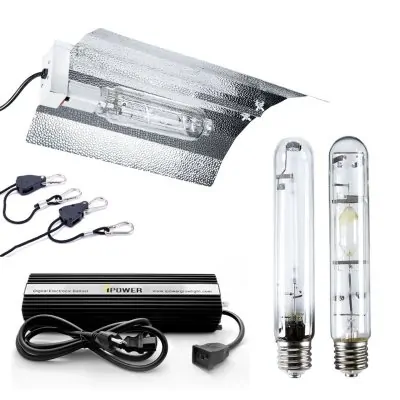
Is it possible to bear fruit though? Yes. It will be just sparse or sporadic. Indoors, you will need to supplement the lighting. Therefore, you’re going to need artificial lighting.
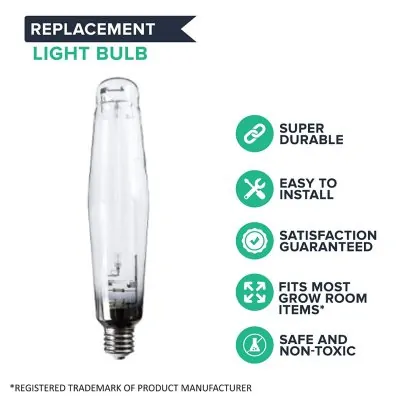
For many years, indoor plant growers have used different types of artificial lights like Incandescent and Compact Fluorescent bulbs. These have all been an attempt to mimic the rays of the sun indoors, as they are hung or placed over the plants or pots to expose all the sides and leaves of the plant to the artificial light, all of these have a varying degree of effectiveness.
Grow light system for indoor lemon trees in action:

There are all kinds of materials that can be used as a container for your lemon tree.
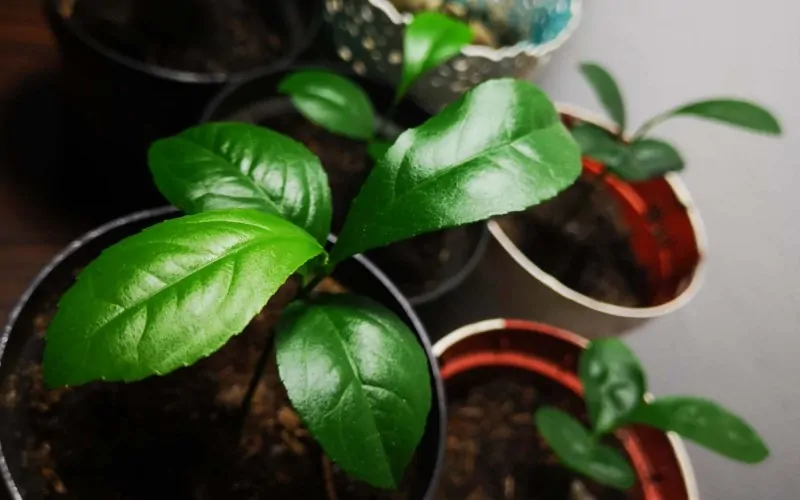
Everything from ornamental, fancy-type containers made of ceramic to the common nursery type black pot and numerous things in between. I have seen people using plastic pickle buckets, Rubbermaid containers, and even garbage cans. You need to consider these conditions especially when you are still in the process of growing them from seeds.
The basic concept should always be the same:
It will truly depend on what you want it to look like and how it will fit into your decor. As for the size that is needed, I try to go for the biggest that I can get, or at least twice the size of whatever pot it is in currently.
This is one of those topics that, if you ask five different people, what type of soil they prefer, you might get six answers!
There are those that like coconut husks and sand. Some like the peat and pine bark mix. Others use sand, perlite, peat, and pine. No, this is not a cop-out. Use what works for you, as long as it covers these three things:
The same process and basis are used to grow a rubber plant and snake plant because these species are not that hard or strict to propagate.
If you do not want to play around with mixing your own potting mix, there are already-made concoctions out there. There are even companies that sell a Citrus/Cactus mix that works very well, such as Miracle-Gro.
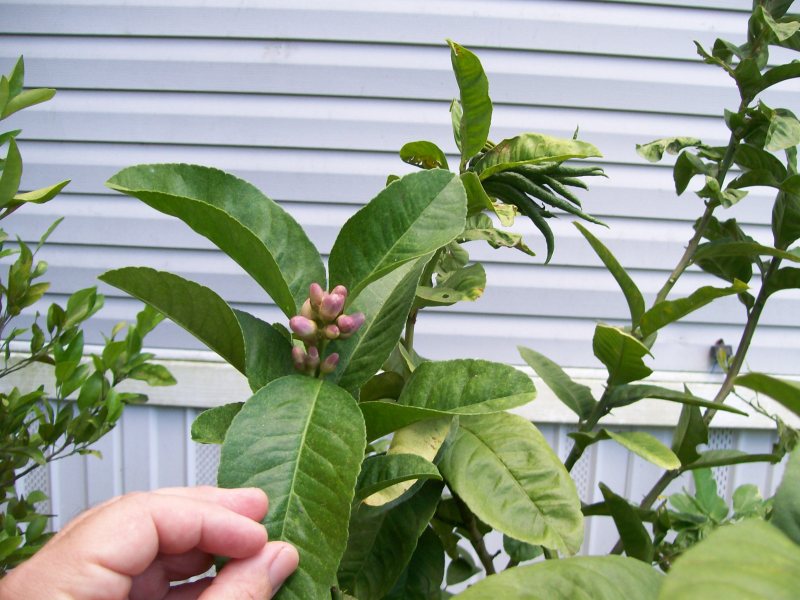
Watering your tree is a little more complicated. Citrus love moisture, yet do not like to sit in water all the time. How much water is enough, or too much?!
What is the answer to this dilemma? Well, I am glad you asked.
There are two methods I use, sometimes in combination of each other.
To check, first, water the plant until you are absolutely sure the rootball is at maximum capacity. You might have to let it soak in a bucket or barrel for an hour or two. Then, either lift the pot or tip it to one side. Whichever way you do this, try and get the feel of the weight of the pot with the saturated rootball. After a couple of days, when you think the tree needs some water, lift it or tilt it again. Does it still feel pretty heavy? Then you should wait a few more days.
After that few days’ time has expired, do the lift/tip again. Do this until it feels approximately half as heavy as it did the first time you tested it with the saturated rootball. I use this method and it works for me. This method works well if you have numerous size pots next to each other. As you can imagine, a very small pot will need water long before a large pot.
This is also where the well-draining potting soil works out well. If you do tend to overwater plants, as long as the drainage is working, it is actually very hard to give your citrus tree too much water. The optimum soil consistency is that of a wrung-out dish sponge.
Fertilizing and feeding your citrus trees can be a very diverse subject. Therefore, if you ask 5 people what they like to use, you will get 6 answers! Lemon trees are heavy nitrogen feeders. Nitrogen is the first number of the three on a fertilizer bag, such as 5-2-6. The five being nitrogen, in this example.
The best fertilizer that I have found is called Citrus-Tone. After using it, I saw very good results almost immediately. That is not to say that it is the end all or be all in fertilizers. I have had discussions with people that hate the stuff and use things that I do not like.

When it comes to indoor lemon trees, I prefer to feed them every 6-8 weeks all year long. As to how much, it will depend on the size of the container. Sprinkle it around the entire top of the soil, lightly, then water it in well. On average, ½ tablespoon per gallon of pot size should be enough.
It is okay to use a slow-release fertilizer also, I think of it more as a drip IV type of feeding. Lemon trees like nitrogen and slow release do not feed them fast enough for my taste. However, I do use it as a backup in case I can’t feed them regularly.
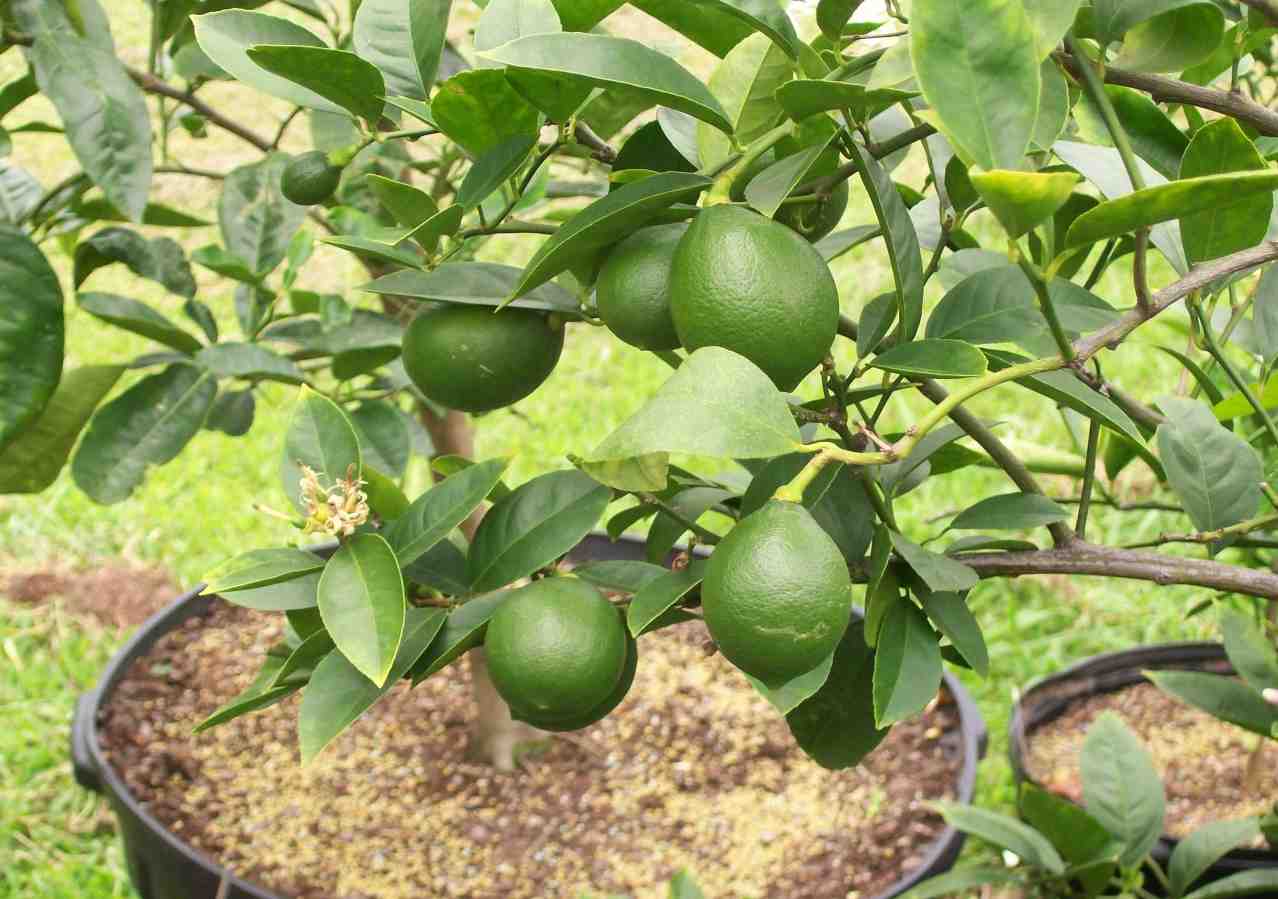
When your lemon starts to flower, this is the time that you will have to really get involved with your tree. Ideally, if the tree was outside the bees would pollinate the flowers to produce fruit. You will have to imitate this process by using a small paintbrush, similar to what they use in grade school and dab pollen from one flower to the other. Just swirl the brush in one flower then move on to another. Lemon trees do not require cross-pollination. Therefore, you only need one lemon tree to pollinate and produce fruit.
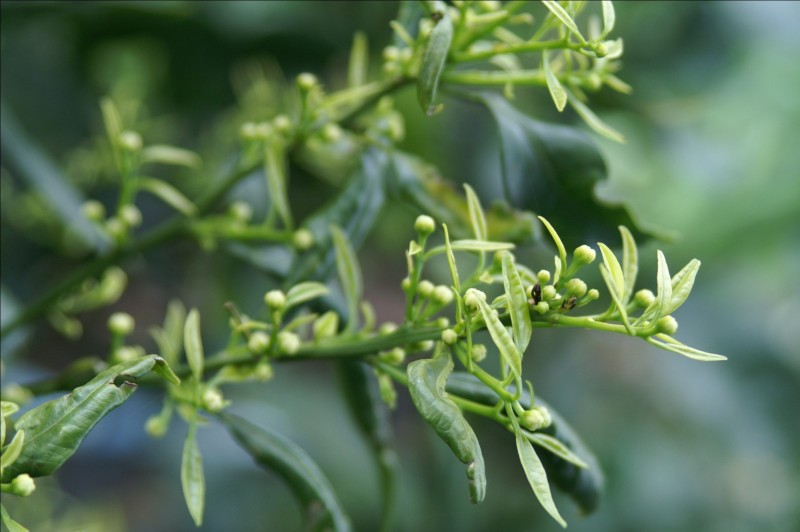
If you can get a lemon tree on a dwarfing rootstock, great! Chances are, you will never be sure if you got one or not, especially if you are growing your lemon tree from seed. The containing of your lemon tree will dwarf the plant somewhat, but it can and will eventually get to the ceiling. Check out our handy guide on tools used for gardening to pick your favorite cutting equipment.
Once the tree gets to the size you want it to be, just give it a haircut to maintain that size. Usually, just before the spring growth comes out is the time to do it, but, if your plant is indoors, it won’t have a seasonal cycle. So, prune it when it has gotten to the point of it being an issue, or right after you have harvested fruit.
Occasionally, you will have a pest or two, usually mealy bugs, aphids, or spider mites. Insecticidal soap or Neem Oil will be your best friends. Both are safe, organic, and will not harm you, your tree, or your pets. Follow the directions on the label and do periodic inspections of your plants to stop a full-blown invasion.
A few varieties to search out would be:
Your lemon tree will really want to be outdoors, and during the non-freezing temperatures, it will be very happy if it is. If you just do not have the room outside and must grow it indoors, follow these simple rules and it will produce just fine. Lots of supplemental light, moisture, and care, and you will have the most wonderful lemons you have ever experienced. Click to learn about the stages of growth for lemon trees.



Monthly updates on your favorite plants and how to keep them alive, delivered straight to your inbox!
Privacy Policy
This privacy policy outlines what info we gather from our visitors and contributors, the tools we use to collect, store, and protect it, and how we use this information.
Like any other website on the World Wide Web, YouHadMeAtGardening.com records some info about you and your device during your visit. This privacy policy outlines how our team gathers, stores, protects, and uses the information it gathers from visitors of the YouHadMeAtGardening.com website.
By continuing to use this website, you implicitly agree to this policy; if you do not agree to some or all of the procedures listed on this page, you can opt out at any time, however, you might not enjoy the intended browsing experience.
Our team reserves the right to alter this privacy policy with no prior notice to you. However, if the alterations made affect your personal data in any way, you will be notified immediately by email, on our homepage, or here.
Information YouHadMeAtGardening.com Collects
Our systems gather personally and non-personally identifiable information from visitors of the YouHadMeAtGardening.com website.
The only personally identifiable information we collect is your name and e-mail address only when leaving comments if you’re a visitor, or when submitting content and leaving comments, if you’re a contributor.
However, if you are not comfortable with providing your personally identifiable information to us, you can also use an alias instead of your real name and e-mail address without breaking any rules or regulations currently in use.
Note: If you submitted a comment using your personally-identifiable information and want it removed, you can always contact us and we will remove your info in 30 days.
The non-personally identifiable information we collect is your IP address, ISP information, device and browser info, and your browsing patterns – specifically the pages and websites you visit. This information cannot be used to track down your identity.
How We Collect Your Information
We use the following tools to gather personally and non-personally identifiable information from visitors and contributors:
• Cookies: these tiny text documents contain unique identifiers that are stored in your computer after your expressed consent. Cookies collect non-personally-identifiable information about your browsing patterns, which helps us pinpoint the areas of our website that require extra work and the areas that fully meet your needs.
• Log files: These tools record browser and device information, browsing patterns, websites that referred you to the YouHadMeAtGardening.com website, pages our website referred you to, and other types of non-personally identifiable information.
• Sign-up forms: these requests only come up when registering for our newsletter and is the only way our team collects personally-identifiable information from visitors.
How We Protect Your Information
All information we gather, both personally and non-personally identifiable, is stored in systems and databases managed only by the YouHadMeAtGardening.com team. We use the latest security measures to make sure the information you provide and the information we gather stays confidential, such as encryption, user behavior monitoring, and a series of managerial procedures.
How We Use Your Information
We only use your personally and non-personally identifiable information to improve the quality of the website and your browsing experience while here. We want to know which pages and sections of our website satisfy your needs and are of real value to you and which ones need improvement so we can make the proper adjustments. We also use your information to make sure the website is properly displayed on your device and browser.
If you choose to opt in for our newsletter, we will also use your information to keep in touch.
However, know that the YouHadMeAtGardening.com team will never share your information with other parties in exchange for financial rewards or any other kind of benefits. Some third parties might get very limited access to your info, but only to your non-personally identifiable information and only as we described above.
The personally identifiable information you provide is strictly confidential, therefore we will not share it with anyone.
Advertising
This Site is affiliated with CMI Marketing, Inc., d/b/a CafeMedia (“CafeMedia”) for the purposes of placing advertising on the Site, and CafeMedia will collect and use certain data for advertising purposes. To learn more about CafeMedia’s data usage, click here: www.cafemedia.com/publisher-advertising-privacy-policy

You really make it seem so easy with your presentation but I find this matter to be actually something which I think I would never understand. It seems too complex and very broad for me. I’m looking forward for your next post, I will try to get the hang of it!
I started some from seed last summer but they stopped growing and have remind the same height since the winter? I was finally able to put them in a bigger pot but the roots felt very hard. Are they lost or is this normal?
Hi Vanity! Sorry for the late reply, we hope your lemon trees are better now! It could be that they didn’t get enough sunlight in winter or the soil might not be nourishing enough. Generally plants bounce back from more than we expect them to, so don’t lose hope!
Hello! I am growing a lemon tree from a seed. I was wondering if it will live long enough to produce fruit as I live in the UK and I searched up that lemon trees grow in hot countries like Spain. Will it survive the cold Winter?
I have a number of lemon trees (and a tangerine and an orange tree) in pots which stay outside on the patio at our home in Cornwall all year round. They flower and form small fruit, but the fruit do not grow to maturity. During harsher winters the trees sometimes lose most of their leaves. Cornwall is unusual for the UK as the temperature rarely falls below 30 degrees F even during winter nights. In Kent you’ll have the advantage of hotter summers which will help to produce more mature fruit, but unless you’re near the coast then the frosts will be much sharper so the trees would definitely benefit from some additional protection like fleecing.
These helped me understand more about how to care not only for my lemon tree but for my other plants too. Thank you Darren, well explained!
can lemon tree fruit at hight of 800 metres above sea level?
Hi Suratna, thank you for your comment! Yes, at that altitude a lemon tree should bear fruit, if it is warm enough. Keep us posted on your lemon tree!