
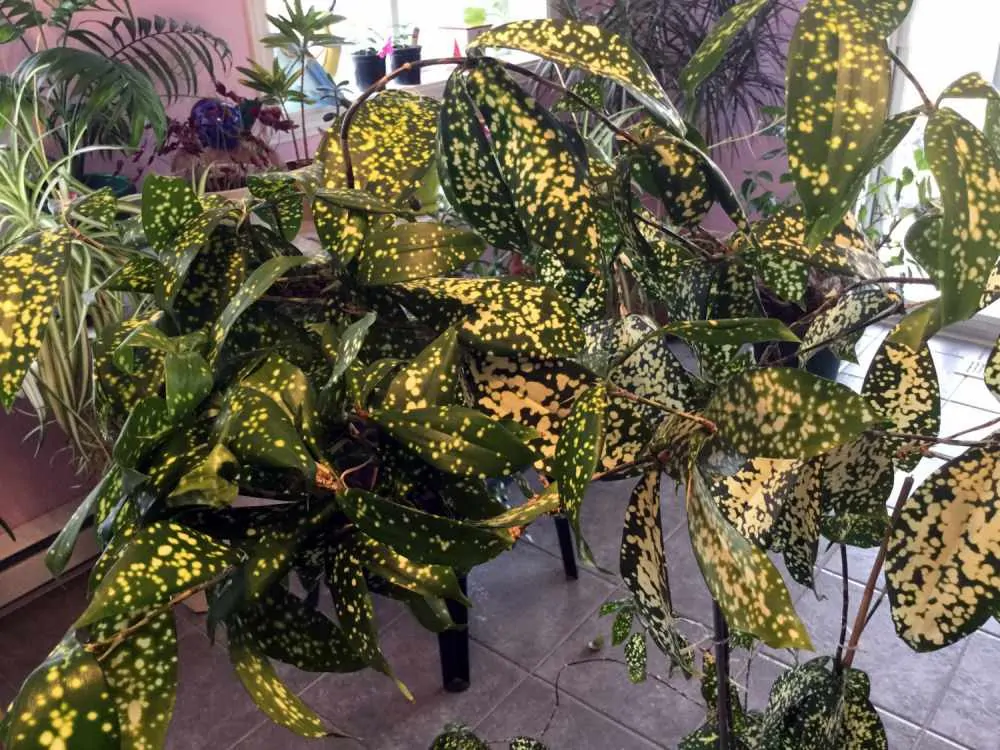
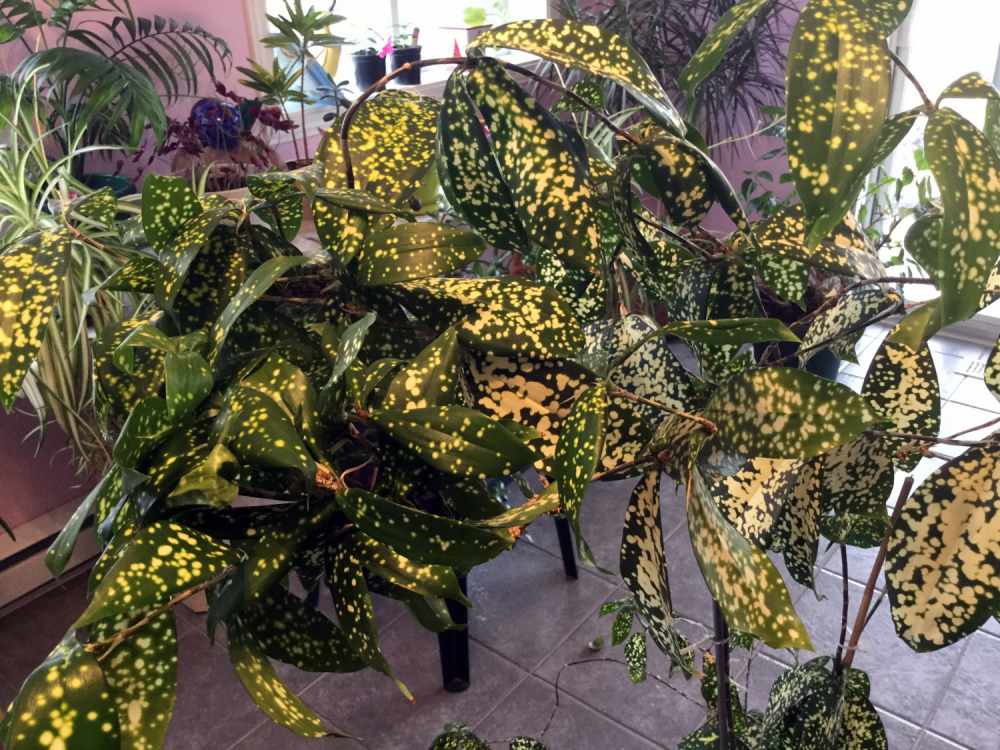
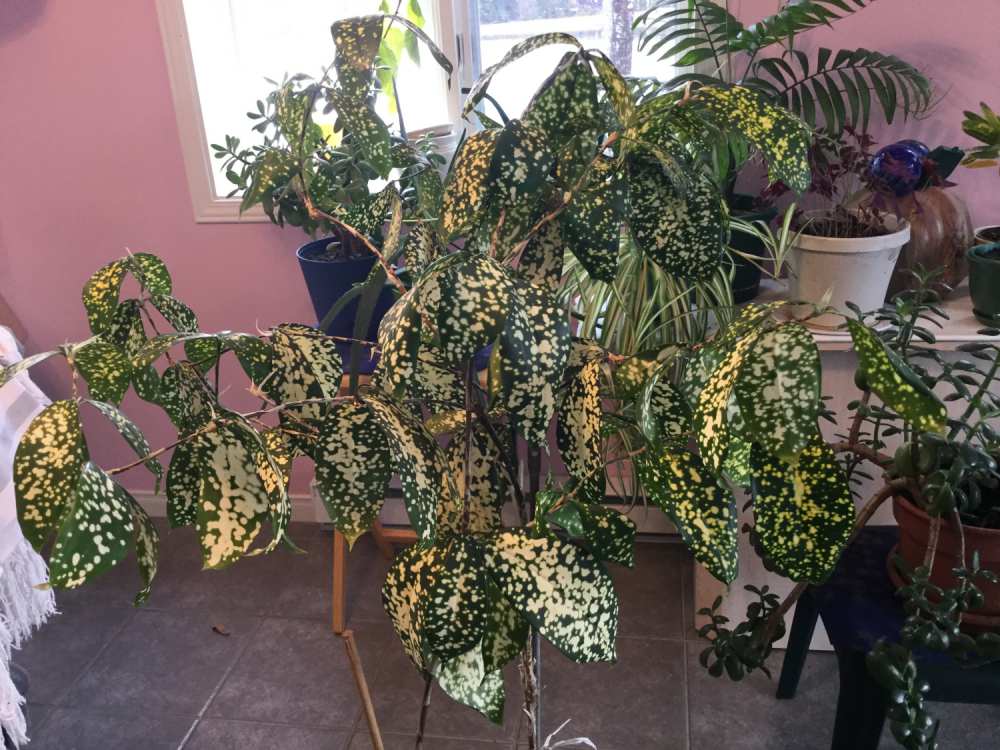
The gold dust plant (Aucuba Japonica) is an evergreen shrub native to forests. It grows well in USDA hardiness zones 6a – 10b, but you can also thrive indoors with proper care. Its glossy, green leaves are speckled with gold and have a striking appearance. The stem is thin and spindly; if you allow the plant to grow tall, the stem will have to be staked.
Outdoors, the plant can grow up to 10 feet tall. As a houseplant, it should be pruned to the desired height. Although slow-growing, the plant can get leggy, so it must be constantly pruned in the spring to keep its size under control.
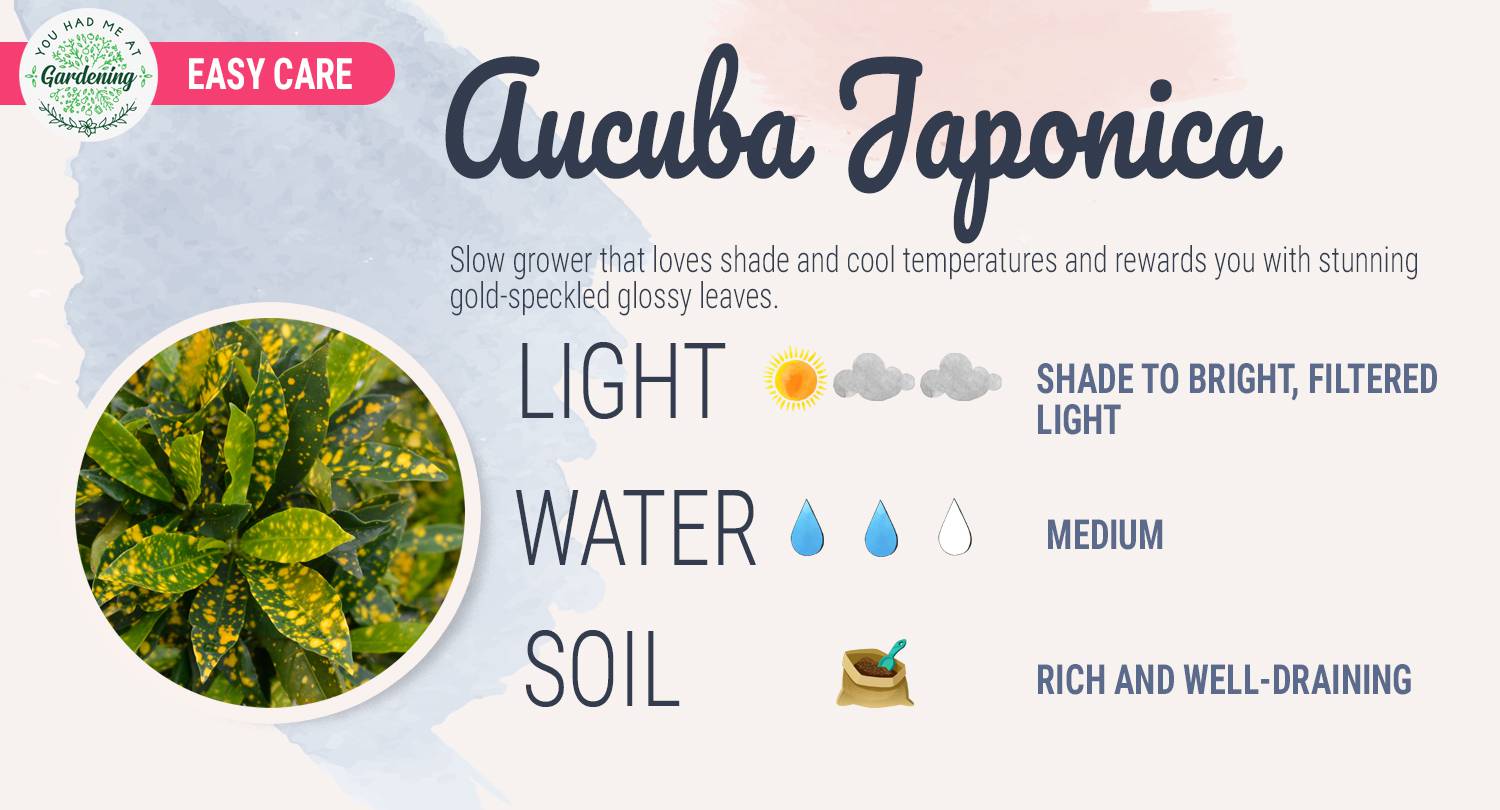
Alternate names: spotted laurel, Japanese laurel, gold dust plant.
 Light Requirements
This beautiful plant needs bright but filtered light and a somewhat cool room temperature to thrive. I once put my plant outdoors in bright sun and it lost every single leaf!
However, the good news is, this is the only big mistake you could make in your gold dust plant care routine. If you keep it away from sunlight, you’re golden!
The Aucuba japonica should be kept in slightly moist soil and watered once or twice per week during the growing season, depending on temperature and dryness. If you are a beginner gardener and the whole business of watering plants is the thing that keeps you from building a beautiful indoor garden, then check out our guide on best watering times, tips, and tricks!
 Best Soil for Aucuba Japonica
A well-draining, organic potting soil is the right medium for gold dust plant care. If you are interested in the best potting soils you can get for your plant, check out our reviews and buying guide!
You can fertilize the gold dust plant once per month in the growing season with a water-soluble fertilizer.
If you wish to propagate the plant, water is not the best medium.
Take a cutting, remove the lower leaves from the cutting and root it in soil mixed with vermiculite and peat moss, making sure that the leaves are above the soil.
Water and place the pot in a plastic bag to mimic a greenhouse effect and keep it away from direct sunlight.
Mist the plant as necessary to keep the soil moist.
If you want some help, we are sure our guide on the best rooting hormones for plant propagation will give you a clearer idea of what products to use and how to use them. Before you buy any rooting hormone, however, make sure you understand well if the product works well with and for your golden dust plant. Follow the instructions carefully and even discuss it with the manufacturer in case some things remain unclear.
Now, let’s answer some of the most frequently asked questions regarding the gold dust plant and its care!
For more information, check out our guide on gorgeous but deadly flowers and plants you should not keep in the proximity of your pets. Just like any plants, the gold dust plant contains substances that can be harmful to dogs and cats when ingested and can lead to vomiting, nausea, dizziness, motor incoordination, and more. The same rule applies to all house plants and pets: keep them at a safe distance from each other!
No, it is not normal to have you aucuba leaves turning black. Aucuba is not a black stylish plant. The reason, however, for the blackening of its leaves correlates with root stress, most often linked to excess moisture/overwatering. It might also present some symptoms of root disease, so it is better to intervene at the first sign that something is not right with your plant.
The aucuba plant can reach maturity – in ideal conditions – in up to 20 years. In these ideal conditions, it can also reach 15 feet tall. If you want your plant to thrive at its full potential, you should recreate its natural environment. It loves full shade and rich, deep, moist soil. However, as we saw above, overwatering may lead to root diseases and plant stress, so make sure that the gold dust plant’s soil is well-drained.
Remember that the Aucuba Japonica is a woodland plant, so the scorching sun will take its toll on it. While it will endure a few hours of sun in the morning, the gold dust plant thrives better in a shadier environment.
We hope you enjoyed these gold dust plant care guide and growing tips. If you have any more questions on how to care for your Aucuba Japonica, feel free to ask your questions in the comments section at the end of this article! Also, if you have your own growing and care tips in regard to this plant, feel free to share them as well!




Monthly updates on your favorite plants and how to keep them alive, delivered straight to your inbox!
Privacy Policy
This privacy policy outlines what info we gather from our visitors and contributors, the tools we use to collect, store, and protect it, and how we use this information.
Like any other website on the World Wide Web, YouHadMeAtGardening.com records some info about you and your device during your visit. This privacy policy outlines how our team gathers, stores, protects, and uses the information it gathers from visitors of the YouHadMeAtGardening.com website.
By continuing to use this website, you implicitly agree to this policy; if you do not agree to some or all of the procedures listed on this page, you can opt out at any time, however, you might not enjoy the intended browsing experience.
Our team reserves the right to alter this privacy policy with no prior notice to you. However, if the alterations made affect your personal data in any way, you will be notified immediately by email, on our homepage, or here.
Information YouHadMeAtGardening.com Collects
Our systems gather personally and non-personally identifiable information from visitors of the YouHadMeAtGardening.com website.
The only personally identifiable information we collect is your name and e-mail address only when leaving comments if you’re a visitor, or when submitting content and leaving comments, if you’re a contributor.
However, if you are not comfortable with providing your personally identifiable information to us, you can also use an alias instead of your real name and e-mail address without breaking any rules or regulations currently in use.
Note: If you submitted a comment using your personally-identifiable information and want it removed, you can always contact us and we will remove your info in 30 days.
The non-personally identifiable information we collect is your IP address, ISP information, device and browser info, and your browsing patterns – specifically the pages and websites you visit. This information cannot be used to track down your identity.
How We Collect Your Information
We use the following tools to gather personally and non-personally identifiable information from visitors and contributors:
• Cookies: these tiny text documents contain unique identifiers that are stored in your computer after your expressed consent. Cookies collect non-personally-identifiable information about your browsing patterns, which helps us pinpoint the areas of our website that require extra work and the areas that fully meet your needs.
• Log files: These tools record browser and device information, browsing patterns, websites that referred you to the YouHadMeAtGardening.com website, pages our website referred you to, and other types of non-personally identifiable information.
• Sign-up forms: these requests only come up when registering for our newsletter and is the only way our team collects personally-identifiable information from visitors.
How We Protect Your Information
All information we gather, both personally and non-personally identifiable, is stored in systems and databases managed only by the YouHadMeAtGardening.com team. We use the latest security measures to make sure the information you provide and the information we gather stays confidential, such as encryption, user behavior monitoring, and a series of managerial procedures.
How We Use Your Information
We only use your personally and non-personally identifiable information to improve the quality of the website and your browsing experience while here. We want to know which pages and sections of our website satisfy your needs and are of real value to you and which ones need improvement so we can make the proper adjustments. We also use your information to make sure the website is properly displayed on your device and browser.
If you choose to opt in for our newsletter, we will also use your information to keep in touch.
However, know that the YouHadMeAtGardening.com team will never share your information with other parties in exchange for financial rewards or any other kind of benefits. Some third parties might get very limited access to your info, but only to your non-personally identifiable information and only as we described above.
The personally identifiable information you provide is strictly confidential, therefore we will not share it with anyone.
Advertising
This Site is affiliated with CMI Marketing, Inc., d/b/a CafeMedia (“CafeMedia”) for the purposes of placing advertising on the Site, and CafeMedia will collect and use certain data for advertising purposes. To learn more about CafeMedia’s data usage, click here: www.cafemedia.com/publisher-advertising-privacy-policy
You do not mention anywhere the depth the root ball grows down to… I need to dig out and move a mature plant, going to split it half to make 2 plants, but I need to know how deep down I need to dig before moving it… please help!!!
Hi Vapor, thank you for reaching out! As with all plants, the depth and width of the root ball depend on the age of the plant, the size pot it was in before planting it outside, the type of soil it is in, and many other factors. It’s really hard to tell exactly how much you need to dig, so we recommend you start digging with a delicate tool or even just gloves around the plant to see how wide the root ball is. Then you can dig around that size until you hit clear ground underneath. Don’t worry if you lose a few roots, a healthy plant can recover from that!
How much can I expect my Aucuba to grow in one year?
Hi Betty,
Circa 8 inch/year. It depends on its environment, but this is the general average.
I have entire hedges around my house of acuba planted 30+ years ago and now they are dying. I cut some back and looks like they are trying to regrow. Is this possible? If so, when is the best time of year to cut the rest back?
Hi Gail, I inherited a beautiful indoor gold dust plant in August. It is growing consistantly from the top but for the past few weeks the bottom leaves are turning yellow and falling off. I have been watering it twice a week, not drowning it, and spritzing it. Is the bottom leaf loss normal this time of year? It had been thriving and I have not changed it’s routine. Thank you for your time.