
When you think of Chinese Hibiscus (Hibiscus Rosa-Sinensis), the first thing that comes to mind is warm, tropical weather. Its seductive flowers in shades of pink, orange and red, waving in a warm, sultry breeze recall beaches and tropical sunsets. However, the good news is you can easily grow it both indoors and outdoors, as long as a few growing requirements are met. So, in order to make sure your tropical plant will produce as many flowers as possible, we’ve created this in-depth hibiscus care guide!
Also, let me tell you that I received my first Hibiscus plant several years ago, and I am still in love with its big, showy red flowers. Living in Canada, any plant providing color through our long, cold winters, is a rare one. So, I cherish my colorful friend and I want to offer it only the best conditions.
So, let’s start giving you the advice you need on this topic!
First of all, it’s important to note that different varieties of hibiscus will require different growing conditions, even if they are basically the same genus. The main difference between the different types of hibiscus plants is the hardiness zones they can grow in.
For example, the tropical hibiscus will need a warmer environment to grow in and is suitable for USDA Zones 9 through 10, while the hardy varieties will thrive in USDA Hardiness Zones 4 through 9.
So, here comes the first hibiscus care tip: Always check what is your USDA Hardiness Zone.
I live in Canadian Hardiness Zone 4 and I place my hibiscus plants outdoors (in their pots) from late May until mid-September.
In Zone 4, summer temperatures can have a daytime high of 90 degrees, and a nighttime low of 62 degrees. Depending on the weather (dryness, rainfall), the plants will require watering every second day at least.
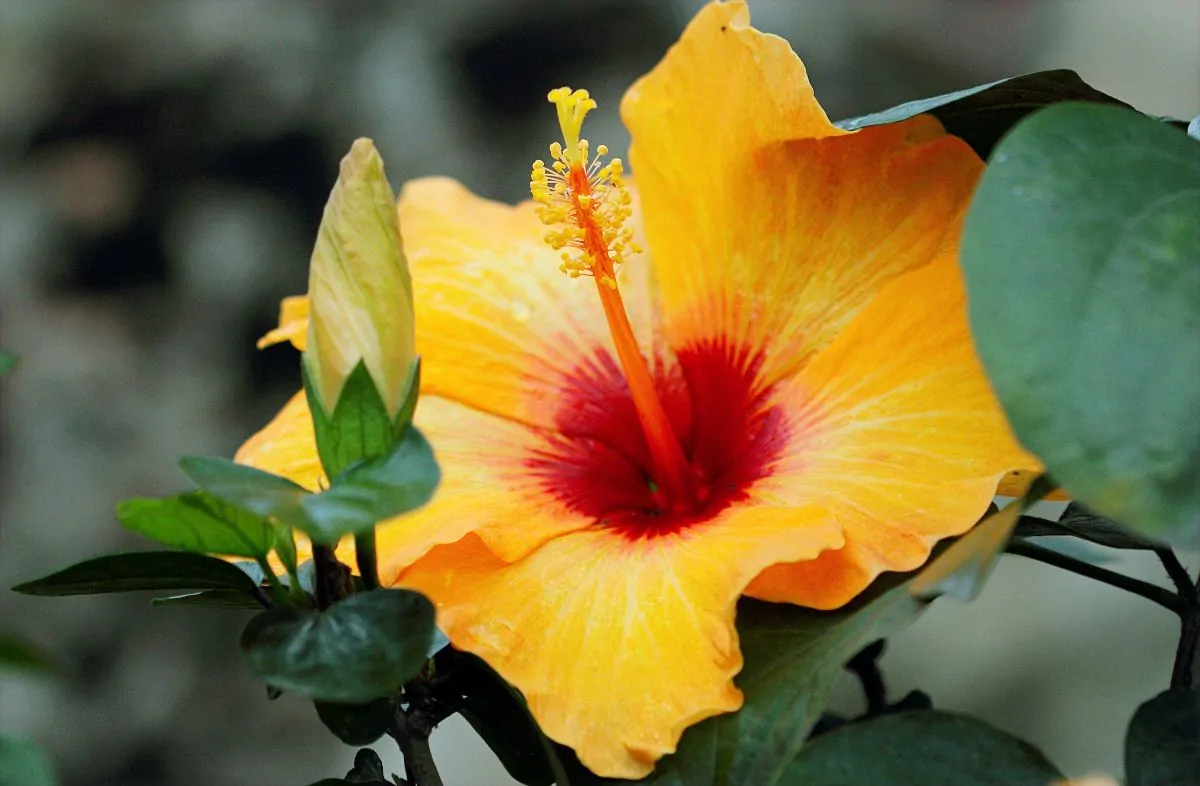
Hibiscus plants bloom often and have attractive and bright flowers, measuring between 4 to 6 inches in diameter. The flowers come in pale peach, pinks, and reds. Sadly, they only last for about 24 hours.
View this post on Instagram
The Chinese Hibiscus will die if the temperature drops below 50 degrees.




To ensure your hibiscus accommodates the shift from outdoors to indoors, it’s a good idea to bring them indoors in the evening for a few days, returning them outside during the day.
A few days before bringing them indoors for good, spray with water all over, including the underside of leaves, to remove any insects.
If you still can’t get rid of them, you can try using insecticidal soap. If you are concerned about residue on the leaves, you can gently wipe the leaves with a solution of diluted white vinegar.
I usually change the top layer of soil before moving the plant indoors and spray the soil and roots (if re-potting), with insecticidal soap to kill any bugs living in the soil.
Trust me: you don’t want fungus gnats around your houseplants!
After moving your hibiscus indoors, you’ll notice some leaves will become yellow and drop off. This is a matter of concern only if the yellowing and leaf loss is excessive, as it might signal that your hibiscus is root bound or is suffering from another kind of stress.
Hibiscus plants grow best when the soil is rich and consistently moist. So, it may be a good idea to either re-pot the plant or at least add some new soil to add additional nutrients before bringing it indoors.
Hibiscus plants need at least 6 hours of full sun to be able to bloom at their full capacity. Indoors, make sure to place it in a sunny spot, so it can receive as much light as possible. It can also thrive in partial shade, but at a cost, it won’t make as many flowers. Basically, more light means more flowers.
If you can’t provide the minimum amount of light indoors, you can always supplement it with grow lights.
From September to April, I place my plants indoors in a bright room and keep the temperature cool (between 60 and 65 degrees). Hibiscus plants need a considerable amount of water, particularly if the humidity in the house is low.
I usually water my plants once per week, but I leave a self-watering bulb in my hibiscus’ soil to make sure it does not dry out.
When they do dry out, the leaves wilt completely although a drink perks them up quickly. Still, it is best for the health of the plant to keep water levels stable as each wilting weakens the plant.
Fertilizing a Hibiscus during its growing season will result in more blooms. A fertilizer low in phosphate and low in potassium is an excellent choice for hibiscus plants.
If you’re not familiar and confident in your fertilizing skills, you can always rely on good soil (a combination of potting soil, peat, and vermiculite), adequate water, good light, and regular attention. So far, this has worked for me although many people swear by fertilizers – individual taste!
Hibiscus plants can get quite leggy, and it is best to prune them significantly at the end of the summer season. I know, it’s always difficult to cut away healthy leaves and stems, but it’s a necessary evil, as it helps the plant stay healthy.
If you are planning on simply wintering the plant and not necessarily encouraging flowering, you can prune it right down to two-thirds of its growth. It will look unfortunate, but as the winter days get longer, new growth will appear.
I currently have three hibiscus plants and a small one that I rooted. I have noticed that as the plants have aged, they rarely flower during winter.
This is proof that regular pruning is essential to have full foliage. The simplest way to root a new plant is to cut a branch just below a node and place it in a glass with fresh water. Change the water every week or so, and be patient! It will take several weeks to root.


All in all, while hibiscus plants can be a little bit needier than some other popular flowers, mastering the basics of hibiscus care isn’t exceedingly difficult, and their vibrant blooms are well worth a little extra effort. With repeated blooming that lasts from spring until fall, there’s so much to love about these bright, exotic flowers.
So, this hibiscus care guide is meant for anyone who wants to add some tropical vibes to their home and garden, regarding that its flower is one of those quintessential tropical blooms that leaves us dreaming of sunsets, beaches, and fruity blended drinks.
Finally, among my many house plants, the Chinese Hibiscus plants stand out for their size and beauty. They are easy to grow houseplants and require less than they can offer. Good light, consistent watering, a little loving attention, and your hibiscus will be the perennial plant of your tropical dreams.
Let us know your thoughts in the comment section below!

Monthly updates on your favorite plants and how to keep them alive, delivered straight to your inbox!
Privacy Policy
This privacy policy outlines what info we gather from our visitors and contributors, the tools we use to collect, store, and protect it, and how we use this information.
Like any other website on the World Wide Web, YouHadMeAtGardening.com records some info about you and your device during your visit. This privacy policy outlines how our team gathers, stores, protects, and uses the information it gathers from visitors of the YouHadMeAtGardening.com website.
By continuing to use this website, you implicitly agree to this policy; if you do not agree to some or all of the procedures listed on this page, you can opt out at any time, however, you might not enjoy the intended browsing experience.
Our team reserves the right to alter this privacy policy with no prior notice to you. However, if the alterations made affect your personal data in any way, you will be notified immediately by email, on our homepage, or here.
Information YouHadMeAtGardening.com Collects
Our systems gather personally and non-personally identifiable information from visitors of the YouHadMeAtGardening.com website.
The only personally identifiable information we collect is your name and e-mail address only when leaving comments if you’re a visitor, or when submitting content and leaving comments, if you’re a contributor.
However, if you are not comfortable with providing your personally identifiable information to us, you can also use an alias instead of your real name and e-mail address without breaking any rules or regulations currently in use.
Note: If you submitted a comment using your personally-identifiable information and want it removed, you can always contact us and we will remove your info in 30 days.
The non-personally identifiable information we collect is your IP address, ISP information, device and browser info, and your browsing patterns – specifically the pages and websites you visit. This information cannot be used to track down your identity.
How We Collect Your Information
We use the following tools to gather personally and non-personally identifiable information from visitors and contributors:
• Cookies: these tiny text documents contain unique identifiers that are stored in your computer after your expressed consent. Cookies collect non-personally-identifiable information about your browsing patterns, which helps us pinpoint the areas of our website that require extra work and the areas that fully meet your needs.
• Log files: These tools record browser and device information, browsing patterns, websites that referred you to the YouHadMeAtGardening.com website, pages our website referred you to, and other types of non-personally identifiable information.
• Sign-up forms: these requests only come up when registering for our newsletter and is the only way our team collects personally-identifiable information from visitors.
How We Protect Your Information
All information we gather, both personally and non-personally identifiable, is stored in systems and databases managed only by the YouHadMeAtGardening.com team. We use the latest security measures to make sure the information you provide and the information we gather stays confidential, such as encryption, user behavior monitoring, and a series of managerial procedures.
How We Use Your Information
We only use your personally and non-personally identifiable information to improve the quality of the website and your browsing experience while here. We want to know which pages and sections of our website satisfy your needs and are of real value to you and which ones need improvement so we can make the proper adjustments. We also use your information to make sure the website is properly displayed on your device and browser.
If you choose to opt in for our newsletter, we will also use your information to keep in touch.
However, know that the YouHadMeAtGardening.com team will never share your information with other parties in exchange for financial rewards or any other kind of benefits. Some third parties might get very limited access to your info, but only to your non-personally identifiable information and only as we described above.
The personally identifiable information you provide is strictly confidential, therefore we will not share it with anyone.
Advertising
This Site is affiliated with CMI Marketing, Inc., d/b/a CafeMedia (“CafeMedia”) for the purposes of placing advertising on the Site, and CafeMedia will collect and use certain data for advertising purposes. To learn more about CafeMedia’s data usage, click here: www.cafemedia.com/publisher-advertising-privacy-policy
Thanks for the great information!