
There are few houseplant enthusiasts that don’t have at least a couple of succulents or cacti in their collection. We all agree that succulents are fascinating and a great addition to the home, but if you really want to up your houseplant game you don’t just buy them. You grow them yourself! For this reason, today we will talk about how to grow succulents from seeds and make the best out of this experience. When it comes to caring for succulents and cacti, you know it is not hard, but growing them? Well…
Growing succulents from seeds is a rewarding and fun experiment for those with a little patience. If you’d like to know how to do so, the article below explains what you’ll need, how to do it, and even how to obtain seeds from your own succulents! For more information on how to make more succulents from the existing ones you already have, check out our guide on how to propagate succulents for the best results!
One of the things that make growing succulents from seed so attractive is that you probably already have most of the items you’ll need at home. As we’ll describe below, you might not even need to buy any seeds if you’ve got flowering succulents or cacti in your collection!
Now, the exact requirements for your succulent growing project vary quite a bit based on the method you’d like to use. Every succulent grower has their own way to go about it that they swear by, so you can always try some different things yourself. Our personal favorite is the vermiculite method, but we’ll discuss some of the other soil mix options below as well.
Some succulent varieties and cacti are easier to grow than others. Most places sell packs of mixed cactus seeds, for example, which are a great option for beginners. These tend to be hardy and forgiving to beginner mistakes and luckily, growing cactus from seed is pretty much identical to growing other succulents.
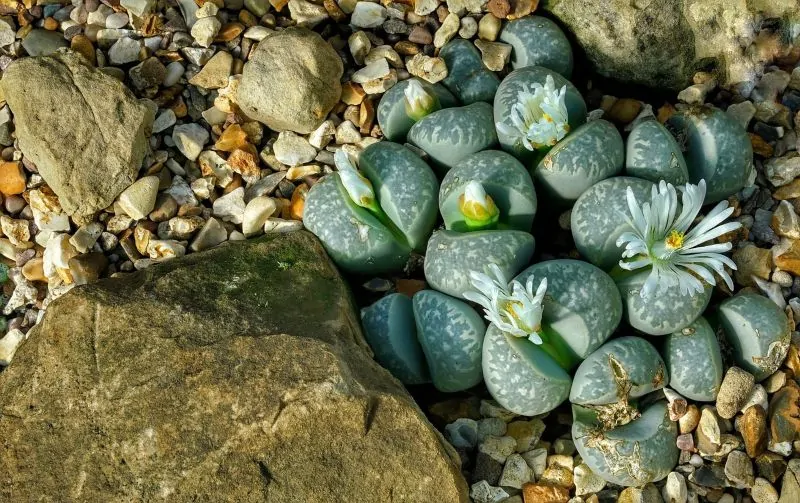
If you have a bit of experience with growing succulents and cacti, you could consider going for something a little more challenging. The super slow-growing mesemb Lithops, for example, would be a nice option if you can muster up the patience
We’ll go further into acquiring succulent and cactus seeds in the next paragraph.
The succulent container you’ll be growing your succulent seeds in can be as simple or fancy as you’d like. The most important factor is that it keeps moisture in somehow since our succulent seedlings are not tolerant of drying out at all in the first stages of their life. A simple plastic container with a lid would work well, but an actual seed starting tray is likely a little easier to use. These feature multiple small containers, an undertray for easy flooding from the bottom, and a lid to keep the moisture in.
Now, this is what very few succulent growers agree on. We like to use pure vermiculite since it’s loose but still keeps moisture in quite well. However, other soil options include coco coir, coarse silica sand, finely smashed perlite, and even unscented kitty litter! Check out our guide on best potting soils if you want to learn more about choosing the best product for your needs!
Just make sure the medium is not too coarse so as to not lose your tiny succulent seedlings, but not so fine that it can become too compact and impede growth (like play sand).
If your windowsills are crowded, it’s possible to grow succulents from seed using just a grow light in a location that would normally be too dark. A LED light for gardening works best. It won’t emit enough heat to burn the seedlings but does help to keep them well-lit and warm.
And honestly, that’s it for the basics! Some like to keep some kitchen paper handy to lay out the seeds as well as toothpicks for seed placement (since they’re so small), but that all depends on how you’d like to go about planting.
As we mentioned in the previous paragraph, different cactus and succulent species differ in how challenging they are to grow and care for. Another factor to keep in mind that can really influence your success is the quality of the seeds you buy.
First off, avoid fancy looking cheap seeds from China. The photos displayed on most product pages are fake (blue Lithops, anyone?) as is the actual product in many cases. If something actually arrives, they tend to be just little seeds for common species of weeds! While they might germinate, it’s not going to be what you’re after at all.
Instead, if you’re going to buy seeds, look for a reputable company with good reviews. There’s Amazon, Etsy, eBay, and independent websites so you should usually be able to find the seeds you’re looking for in one place or another.
If you already grow succulents and they’re doing well, there’s a good chance they’ll be putting out flowers. Species like Haworthia, Echeveria, and Gasteria ( and many more flowering succulents types) tend to bloom quite often and you can actually harvest their seeds once the flowers die off. This involves pollinating the flower to make sure seeds form, and then performing some rather delicate operations possibly involving tweezers to get the tiny seeds out.
A bit of a task, but very rewarding if your seeds end up flourishing!
The video below shows how to do this with Echeveria types seeds: note how they’re so tiny a paintbrush has to be used to collect them.
Another nice way of acquiring succulent seeds that involves getting to eat some tasty food is to buy prickly pear fruits. Anyone that eats these regularly knows it can be a pain to get around the seeds, but this has its advantages: you can actually save and plant them. Make some yummy lemonade or jam and experiment with growing cactus from seed at the same time. This also works with dragon fruit (Pitahaya) and the Peruvian apple cactus’ delicious bearings.
If you’ve acquired your succulent or cactus seeds, selected your preferred soil type and found a suitable container to start the seeds in, you’re ready to go. The steps below will outline how to actually go about sowing the seeds and caring for the seedlings through the first steps of their lives.
Now, first off, planting your succulent seeds is not going to be an outdoor project. The seeds are so small the wind can easily blow them away, so set everything up on an indoor table instead. Placing kitchen paper underneath your “planting station” can help if you manage to lose a few seeds along the way.
Fill the compartments of your sowing tray with the vermiculite or whichever other medium you chose. Then go ahead and moisten the soil, which is easy to do if you’re using a succulent propagation tray since they tend to have a removable undertray that you can flood. Once the soil has been sufficiently moistened, you can sprinkle the seeds on there.
This can be done using your fingers, but some prefer using something like a toothpick or paintbrush since the seeds are so hard to work with. However you do it, get a few seeds into each container but don’t overdo it, as this will make repotting later very challenging.
That’s it for the planting process: now you just need to make sure the moisture stays in and give the seeds time to grow. If you used a normal pot, bag it in a clear ziplock baggie. In case of a propagation tray or plastic container, you can just put the lid on and make sure it’s fastened securely. Then, place it underneath your grow light or on a windowsill that receives lots of light but no direct sun (North or West in the Northern hemisphere). If you have a hard time picking suitable grow lights for your gardening projects, check out our guide on the best grow lights on the market, and choose the one that best serves your needs!
Most seeds germinate surprisingly quickly, you can see growth within a week or so if they were fresh and the circumstances are favorable. Once the sprouts pop up you can remove the lid to give them fresh air, since too much moisture can cause issues with rot or mold.
They’ll need to be kept constantly moist at first until they establish their root systems, but as the weeks go by you can slowly reduce the watering frequency.
For more information on growing succulents from seeds, leaves, or stems, make sure you check out our guide on the best methods to propagate succulents! You will find plenty of helpful information there that will be of use, no matter what gorgeous succulent you want to multiply.
Although succulents are slow growers, most should start to look like tiny versions of their adult counterparts within a few weeks. Once they’ve grown leaves (in the case of succulents) or the first few spines (cacti) you can probably pat yourself on the back and say you did it! You now have tiny baby succulents.
Care for these is similar to that of adult succulents once they’ve developed somewhat of a root system: water when the soil has dried out fully. The light should be bright but indirect until the succulent is all grown up (after about 6 months), and when you do make the move to the full sun it should be gradual. The seedlings will show you how they feel in regards to light themselves, growing lankier and pale if it’s too little and acquiring reddish-brown sunburn if you overdid it.
Because you most likely sprinkled multiple seeds in each tray, there will come a point (after a few months) where you have to re-pot the seedlings to prevent them from crowding each other too much. If you used a loose mixture like vermiculite this will be easy enough. Just move the seedlings to a regular succulent soil medium like perlite + potting soil or bonsai soil and voilà!
Instead of a wrap-up on this guide on how to grow succulents from seeds, let’s answer quickly some of the most frequently asked questions related to this process!
It all depends on the succulent variety you are trying to propagate. Some succulents will germinate anywhere between a week and three, while others can take months.
Once you planted the succulent seeds, you need to keep them moist until they manage to establish their root system. As the weeks go by, you can reduce the amount of water progressively. In between watering sessions, let the soil dry for about one inch below the soil surface. Keep in mind that in summer, your succulents may need a bit more water as the weather warms.
If you want to grow succulents from seeds in an efficient manner, we recommend you grow some Kalanchoe varieties (Kalanchoe tormentosa, Kalanchoe marmorata, Kalanchoe diagremontana, Kalanchoe tubiflora, and Kalanchoe pinnata are some of the best). If you want more information, check out our Kalanchoe plant care guide and learn everything there is to know about making it grow and bloom!
As you’ve hopefully concluded, growing succulents from seeds is something any houseplant enthusiast can do. You don’t need an extremely green thumb to get your seedlings to thrive, just make sure you get high-quality seeds and follow the guidelines. Just remember that it’s normal for this stuff to sometimes not go as you wanted: some batches just won’t make it. Note any mistakes you made and don’t let them scare you off!
In case you have some succulents you love but seem to be in distress, check out this guide on succulent leaves falling off, the reasons this occurs, and what you can do about it!
You might also wanna check out other related articles like How To Grow Dragon Fruit, Succulent Wall Making, and 10 Small Indoor Plants And How To Take Care Of Them.
If you have more questions about how to grow succulents from seeds or want to share your own tips and experiences, be sure to comment below. Additional info is always welcomed!

Monthly updates on your favorite plants and how to keep them alive, delivered straight to your inbox!
Privacy Policy
This privacy policy outlines what info we gather from our visitors and contributors, the tools we use to collect, store, and protect it, and how we use this information.
Like any other website on the World Wide Web, YouHadMeAtGardening.com records some info about you and your device during your visit. This privacy policy outlines how our team gathers, stores, protects, and uses the information it gathers from visitors of the YouHadMeAtGardening.com website.
By continuing to use this website, you implicitly agree to this policy; if you do not agree to some or all of the procedures listed on this page, you can opt out at any time, however, you might not enjoy the intended browsing experience.
Our team reserves the right to alter this privacy policy with no prior notice to you. However, if the alterations made affect your personal data in any way, you will be notified immediately by email, on our homepage, or here.
Information YouHadMeAtGardening.com Collects
Our systems gather personally and non-personally identifiable information from visitors of the YouHadMeAtGardening.com website.
The only personally identifiable information we collect is your name and e-mail address only when leaving comments if you’re a visitor, or when submitting content and leaving comments, if you’re a contributor.
However, if you are not comfortable with providing your personally identifiable information to us, you can also use an alias instead of your real name and e-mail address without breaking any rules or regulations currently in use.
Note: If you submitted a comment using your personally-identifiable information and want it removed, you can always contact us and we will remove your info in 30 days.
The non-personally identifiable information we collect is your IP address, ISP information, device and browser info, and your browsing patterns – specifically the pages and websites you visit. This information cannot be used to track down your identity.
How We Collect Your Information
We use the following tools to gather personally and non-personally identifiable information from visitors and contributors:
• Cookies: these tiny text documents contain unique identifiers that are stored in your computer after your expressed consent. Cookies collect non-personally-identifiable information about your browsing patterns, which helps us pinpoint the areas of our website that require extra work and the areas that fully meet your needs.
• Log files: These tools record browser and device information, browsing patterns, websites that referred you to the YouHadMeAtGardening.com website, pages our website referred you to, and other types of non-personally identifiable information.
• Sign-up forms: these requests only come up when registering for our newsletter and is the only way our team collects personally-identifiable information from visitors.
How We Protect Your Information
All information we gather, both personally and non-personally identifiable, is stored in systems and databases managed only by the YouHadMeAtGardening.com team. We use the latest security measures to make sure the information you provide and the information we gather stays confidential, such as encryption, user behavior monitoring, and a series of managerial procedures.
How We Use Your Information
We only use your personally and non-personally identifiable information to improve the quality of the website and your browsing experience while here. We want to know which pages and sections of our website satisfy your needs and are of real value to you and which ones need improvement so we can make the proper adjustments. We also use your information to make sure the website is properly displayed on your device and browser.
If you choose to opt in for our newsletter, we will also use your information to keep in touch.
However, know that the YouHadMeAtGardening.com team will never share your information with other parties in exchange for financial rewards or any other kind of benefits. Some third parties might get very limited access to your info, but only to your non-personally identifiable information and only as we described above.
The personally identifiable information you provide is strictly confidential, therefore we will not share it with anyone.
Advertising
This Site is affiliated with CMI Marketing, Inc., d/b/a CafeMedia (“CafeMedia”) for the purposes of placing advertising on the Site, and CafeMedia will collect and use certain data for advertising purposes. To learn more about CafeMedia’s data usage, click here: www.cafemedia.com/publisher-advertising-privacy-policy
Very interesting reading.
Just received my first batch of seeds
Thank you for the advice
Will keep you in the loop with my new hobby
Kind regards
Marti