



Who doesn’t love a green, sprawling lawn and the scent of freshly mowed grass – these are some of the pleasures of a summer day. But these splendid lawns don’t appear magically. There are numerous factors to consider when planning a lawn or improving its look. Types of grass and the grass seed, climate, site geography, all play into having a beautiful green expanse. This article will examine a variety of grasses, how to plant grass seed, and what to consider when choosing the best grass seed products currently available.
The one-size-fits-all approach won’t work when it comes to grass seed. It’s necessary to take a few factors into consideration such as climate, the anticipated wear and tear, and the amount of sun and shade.
The climate is important as different types of grass seed thrive better in certain temperatures than others.
Wear and tear make a great difference – will the lawn be used for sports activities or display?
What’s the amount of sun and shade the area receives? What daily water requirements are acceptable? How quickly are results desired? And perhaps most importantly, how much time do you want to spend maintaining your lawn?
Grass seed is usually divided into two main types, cool and warm season, with a transition zone combining the two.
This type of grass will thrive in areas with temperature fluctuations of cold winters and hot summers. In the upper two-thirds of the United States, for example, the best seeds to sow are cool-season seeds as they grow best in temperatures between 60F and 75F.
Cool-season seeds grow rapidly in the spring and fall and are shade and drought tolerant. However, they will turn brown in the prolonged summer heat. Some common types of cool-season grasses are Perennial ryegrass, tall or fine Fescue, and Bluegrass.
Warm-season seeds, on the other hand, need sun and warm temperatures between 75F to 90F to thrive. They are the best choice for the lower third of the United States.
These seeds grow in summer, but become dormant in winter, only to green up again as spring arrives. They are heat and drought tolerant. Some common types are Bermuda Grass, Bahia, or St Augustine.
The central tier of the United States is considered a transition zone between the cold and warm seasons. In this zone, winters are too cold for warm-season seeds and summers are too hot for cool-season seeds.
In this case, you must look for cool-season seeds, like Tall Fescue, which are heat tolerant and develop deep roots for drought and heat protection.
Also, there are some types of warm-season seeds that are cold tolerant, like Zoysia. So, a mix of these types of seed may be the best choice for a transition zone.
There are several grass seed products available. Some are called turf builders as they include fertilizers, some are grass seed mixes to accommodate different climates, and some are designed to renew dead grass patches.
Generally speaking, a mix will contain different types of grass seed, while a blend is a combination of different varieties of the same type of seed.
Blends and mixes can provide a fuller look to your lawn and offer a higher level of resistance to disease than straight seed.
Choosing the right seed, blend or mix, not only gives you a beautiful lawn but can be critical in reducing soil erosion, filtering groundwater and improving air quality.
Let’s look at some of the most popular choices!
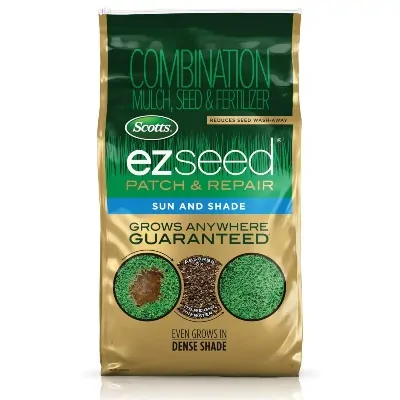
This preparation is a combination of grass seed, mulch, and fertilizer and is meant for patching difficult areas rather than replacing a full lawn.
The pack includes a tackifier that helps to prevent seeds from washing away. The product releases nutrients into the soil and germinates quickly. Scotts EZ seed comes in 4 LB to forty LB packages, plus a 2 LB bag made specially to repair dog spots.
The 20LB bag provides seed for an area of 445 feet.
| Type | Season | Resistance | Light Requirements | Watering Needs |
| Sun and Shade | A mix designed to grow anywhere | Withstands high traffic | Full sun to dense shade | Moderate |
| Tall Fescue | Cool-season and transition grass | Withstands moderate traffic | Full to partial sun | Low, high-drought resistant |
| Bermuda grass | Warm-season grass | Withstands fine to medium level of foot traffic | Requires full sun | Low, high-drought resistant |
| Centipede grass | Warm-season grass | Withstands only light foot traffic | Full sun to partial shade | Moderate |
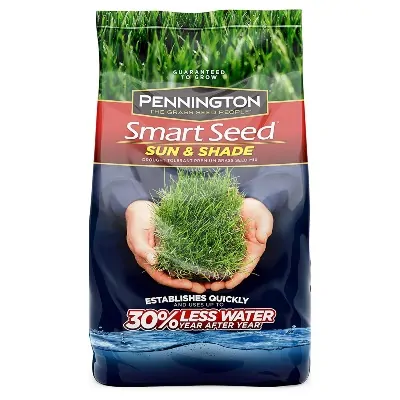
This seed mix combines grass seeds (Tall Fescue and Kentucky Bluegrass) that perform well in both sun and shade. It is considered drought-tolerant and thus, uses up to 30% less watering. It germinates quickly and produces a thick green lawn.
Pennington grass seed is protected by Penkoted technology which protects the seed from fungus infections. A 7 lb bag is enough seed to cover 2300 square feet. This product is well rated by Amazon’s customers with 40% of reviewers giving it 5 stars.
| Type | Season | Resistance | Light Requirements | Watering Needs |
| Tall Fescue | Cool-season and transition grass | Withstands moderate traffic | Full to partial sun | Low, high-drought resistant |
| Kentucky Bluegrass | Cool-season grass | Withstands high traffic, often used for parks and golf courses | Performs best in full sun | Medium requires frequent irrigation in the summer months |
Black Beauty grass seed is a mix of Tall Fescue, Kentucky Bluegrass and Perennial Ryegrass and is best used in cool-season and transition areas.
It is disease resistant and drought tolerant and the blades have a waxy coating that preserves moisture in hot weather. Roots reach 4 inches. The 7 LB bag provides coverage for 2800 square feet.
| Type | Season | Resistance | Light Requirements | Watering Needs |
| Tall Fescue | Cool-season and transitional grass | Withstands moderate traffic | Full to partial sun | Low, high-drought resistant |
| Kentucky Bluegrass | Cool-season grass | Withstands high traffic | Performs best in full sun | Medium, requires frequent irrigation in summer months |
| Perennial Ryegrass | Cool-season grass | Withstands high traffic | Full sun and partial shade | High, needs a lot of water to maintain color |
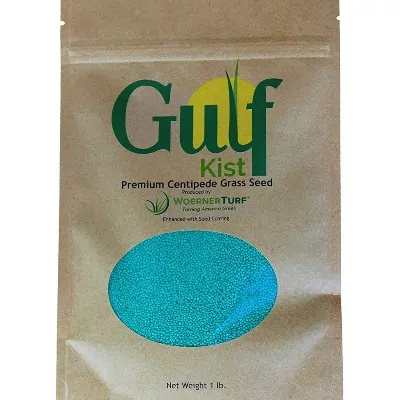
This Centipede grass is a coated grass seed, so no added mulch is needed. Centipede grass is best for hot climates and tolerates hot sun and acidic soil.
It is low maintenance and claims to have no true dormancy period so it won’t go brown in cooler weather. It should be planted when the soil is consistently 70F and then kept moist for 2 to 3 weeks.
| Type | Name | Resistance | Light Requirements | Watering needs |
| Centipede Grass | Warm-Season Grass | Withstands only light foot traffic | Full and partial sun | Moderate |
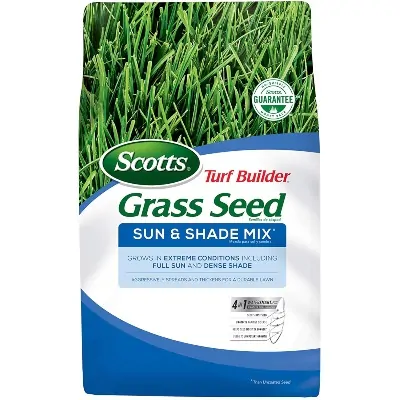
Scotts’ turf builder is a product that combines synthetic fertilizer with grass seed. Its Water Smart Plus Coating absorbs twice as much water as other seeds, provides nutrients for the seed and protects seedlings from disease.
This Scotts product is their most versatile grass seed mix. It claims that lawns treated with this turf builder will stay green in dense shade and hot sun.
| Type | Season | Resistance | Light Requirements | Watering Needs |
| Creeping Red Fescue | Cool-season grass | Withstands low traffic | Areas of heavy shade | Low irrigation needed once established |
| Kentucky Bluegrass | Cool-season grass | Withstands high traffic | Performs best in full sun | Medium, requires frequent irrigation in summer months |
| Perennial Ryegrass | Cool-season grass | Withstands high traffic | Full sun and partial shade | High, needs a lot of water to maintain color |
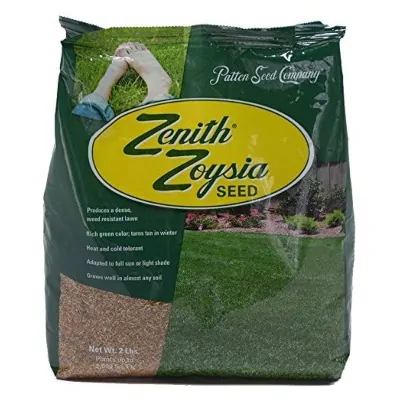
This product from Patten Seed Company is pure seed, not mixed with mulch or fertilizer. It is a seed often used in warm-season to upper transition zones for both commercial and residential properties. It is highly adaptable from full sun to light shade and provides a dark green, dense growth.
A 2- pound bag covers 2000 square feet. Amazon.com customers are mixed in their opinions but 45% of reviewers who assigned 5 stars claim that as long the seed is planted when the soil is consistently warm and is very well watered, the products nets excellent results.
| Type | Name | Resistance | Light Requirements | Watering needs |
| Zoysia | Warm-Season Grass | Withstands high foot traffic | Full sun to light shade | Moderate, drought-tolerant once germinated |
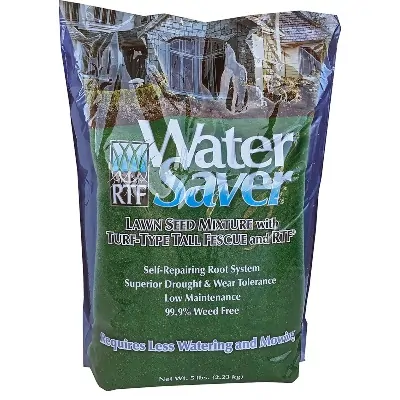
The WaterSaver Grass Seed Mixture is a self-repairing, turf-type tall fescue seed. RTF refers to seeds that establish a deep root system by producing lateral rhizomes. This causes shoots to spread laterally, filling in bare spots and providing a dense lawn.
It grows well in both sun and shade. Five to ten pounds provide 1000 square foot coverage.
| Type | Name | Resistance | Light Requirements | Watering needs |
| RTF Tall Fescue | Transition Zone Grass | Withstands moderate traffic | Adapts to the hot sun and cold winters | Low, drought-tolerant |
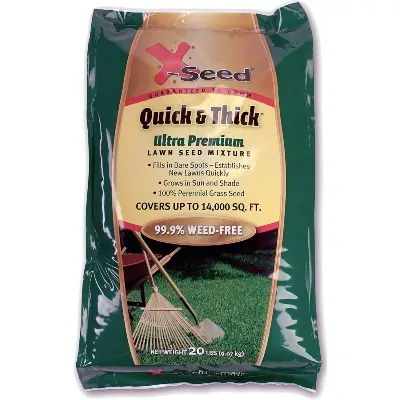
The X-Seed Premium lawn seed is a mix of three grass seed types (Creeping Red Fescue, Kentucky Bluegrass, and Perennial Ryegrass) and works best in the transition and cool-season zones.
| Type | Season | Resistance | Light Requirements | Watering Needs |
| Creeping Red Fescue | Cool-season grass | Withstands low traffic | Areas of heavy shade | Low irrigation needed once established |
| Kentucky Bluegrass | Cool-season grass | Withstands high traffic | Performs best in full sun | Medium, requires frequent irrigation in summer months |
| Perennial Ryegrass | Cool-season grass | Withstands high traffic | Full sun and partial shade | High, needs a lot of water to maintain color |
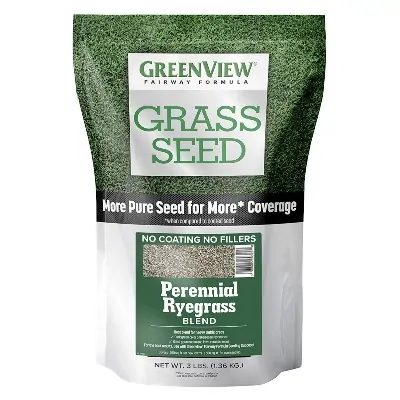
The GreenView grass seed has a high germination rate and produces a hardy, resilient, lush green lawn which can withstand heavy traffic.
It is 100% seed with no fillers or mulch.
| Type | Name | Resistance | Light Requirements | Watering needs |
| Perennial Ryegrass | Cool-Season Grass | Withstands high traffic | Full sun to partial shade | High, needs a lot of water to maintain its color |
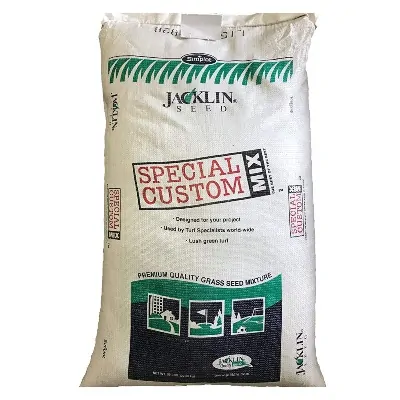
This mix from Jacklin Seed contains 85% Kentucky Bluegrass and 15% Perennial Ryegrass.
The Ryegrass provides quick germination, the Kentucky Bluegrass fills in with durable blades which eventually will crowd out the Ryegrass for a dense looking lawn.
A 10-pound will yield enough seed to plant a 4000 square foot lawn.
| Type | Season | Resistance | Light Requirements | Watering Needs |
| Perennial Ryegrass | Cool-season grass | Withstands high traffic | Full sun to partial shade | High, needs a lot of water to maintain its color |
| Kentucky Bluegrass | Cool-season grass | Withstands high traffic | Performs best in full sun | Medium requires frequent irrigation in the summer months |
The first thing to identify when getting ready to plant your lawn is your growing region.
If you live in a cool-season area, the best time to sow grass seeds is in the Fall when the temperature corresponds with the seeds’ most active growth period. The second best time for cool-season seeds is Springtime when daytime temperatures have consistently reached 60F to 75F.
Conversely, warm-season areas should be sowed in Spring and early Summer when temperatures reach 80F. In addition to climate, issues like traffic, water requirements, etc. all come into play.
To prepare the site, it is recommended that a soil sample be taken to determine if the soil has the proper nutrients and pH for successful planting. There are soil labs and municipalities which will perform this test, so you will know if your soil requires any amendments.
It is important to till the soil, with a rake or other aerator. Aeration is needed, along with water, for grass seeds to grow. Remove rocks and organic matter, loosening two to three inches of soil and lightly spread grass seed, working it into the soil to a depth of approximately ¼ inch.
If your goal is to improve the overall health of your lawn and/or cover bare spots, you can “overseed”, which means adding seeds to existing lawns.
Regardless of your objective, proper watering is key to the grass seeds germinating and growing. After planting, the soil should be consistently moist (not soggy). Avoid making puddles. Water 2 to 3 times per day in the first period until the seeds begin to germinate. Once the grass is growing, slowly reduce watering.
Limit traffic on the newly sowed site until the grass is well-established. When the grass reaches at least 3 inches high, it’s time to start mowing!
Grass seed types and lawn care are wide and varying topics. We have examined the issues to consider when planting or reviving a lawn and there is a multitude of seeds and products to help with this task.
A quick search will reveal which seeds are best for which climate, sunshine or shade, soil types, commercial or residential use, and many other uses. We would love to hear about your experience with growing the perfect lawn…or not!
I hope this article has been helpful to you.



Monthly updates on your favorite plants and how to keep them alive, delivered straight to your inbox!
Privacy Policy
This privacy policy outlines what info we gather from our visitors and contributors, the tools we use to collect, store, and protect it, and how we use this information.
Like any other website on the World Wide Web, YouHadMeAtGardening.com records some info about you and your device during your visit. This privacy policy outlines how our team gathers, stores, protects, and uses the information it gathers from visitors of the YouHadMeAtGardening.com website.
By continuing to use this website, you implicitly agree to this policy; if you do not agree to some or all of the procedures listed on this page, you can opt out at any time, however, you might not enjoy the intended browsing experience.
Our team reserves the right to alter this privacy policy with no prior notice to you. However, if the alterations made affect your personal data in any way, you will be notified immediately by email, on our homepage, or here.
Information YouHadMeAtGardening.com Collects
Our systems gather personally and non-personally identifiable information from visitors of the YouHadMeAtGardening.com website.
The only personally identifiable information we collect is your name and e-mail address only when leaving comments if you’re a visitor, or when submitting content and leaving comments, if you’re a contributor.
However, if you are not comfortable with providing your personally identifiable information to us, you can also use an alias instead of your real name and e-mail address without breaking any rules or regulations currently in use.
Note: If you submitted a comment using your personally-identifiable information and want it removed, you can always contact us and we will remove your info in 30 days.
The non-personally identifiable information we collect is your IP address, ISP information, device and browser info, and your browsing patterns – specifically the pages and websites you visit. This information cannot be used to track down your identity.
How We Collect Your Information
We use the following tools to gather personally and non-personally identifiable information from visitors and contributors:
• Cookies: these tiny text documents contain unique identifiers that are stored in your computer after your expressed consent. Cookies collect non-personally-identifiable information about your browsing patterns, which helps us pinpoint the areas of our website that require extra work and the areas that fully meet your needs.
• Log files: These tools record browser and device information, browsing patterns, websites that referred you to the YouHadMeAtGardening.com website, pages our website referred you to, and other types of non-personally identifiable information.
• Sign-up forms: these requests only come up when registering for our newsletter and is the only way our team collects personally-identifiable information from visitors.
How We Protect Your Information
All information we gather, both personally and non-personally identifiable, is stored in systems and databases managed only by the YouHadMeAtGardening.com team. We use the latest security measures to make sure the information you provide and the information we gather stays confidential, such as encryption, user behavior monitoring, and a series of managerial procedures.
How We Use Your Information
We only use your personally and non-personally identifiable information to improve the quality of the website and your browsing experience while here. We want to know which pages and sections of our website satisfy your needs and are of real value to you and which ones need improvement so we can make the proper adjustments. We also use your information to make sure the website is properly displayed on your device and browser.
If you choose to opt in for our newsletter, we will also use your information to keep in touch.
However, know that the YouHadMeAtGardening.com team will never share your information with other parties in exchange for financial rewards or any other kind of benefits. Some third parties might get very limited access to your info, but only to your non-personally identifiable information and only as we described above.
The personally identifiable information you provide is strictly confidential, therefore we will not share it with anyone.
Advertising
This Site is affiliated with CMI Marketing, Inc., d/b/a CafeMedia (“CafeMedia”) for the purposes of placing advertising on the Site, and CafeMedia will collect and use certain data for advertising purposes. To learn more about CafeMedia’s data usage, click here: www.cafemedia.com/publisher-advertising-privacy-policy