
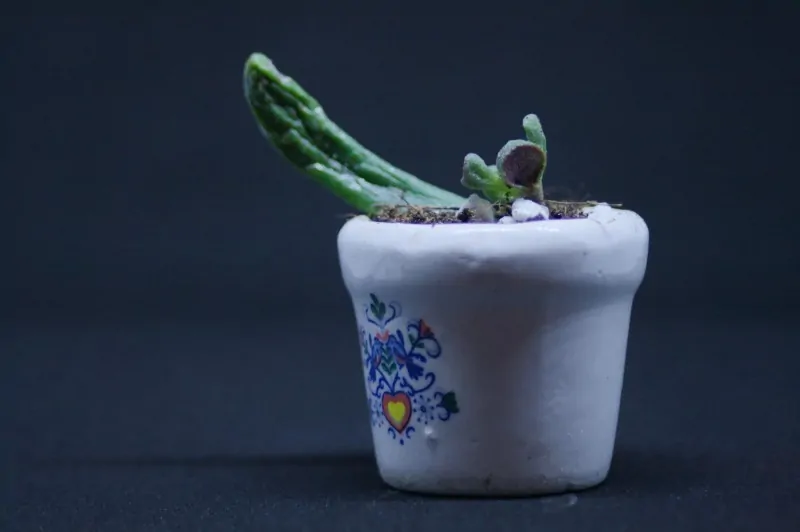
Most succulents are easy to care for, but that doesn’t mean they’re indestructible. However, if you’re new to the world of succulents, it can be disheartening if your plant doesn’t appear to be doing well. If you’re noticing succulent leaves falling off and nothing seems to help, don’t worry, we are here to help!
You can usually easily nurse your beautiful flowery succulents back to health: you just have to pinpoint the cause of the issue to be able to correct it.
The easiest way to figure out why your succulent leaves are falling off is to take a good look at what the foliage looks like before it dislodges.
Are the leaves crispy, or are they soft? Are they brown, or more of a pale yellow color?
Take a peek at your succulent’s leaves and compare your findings with the list below.
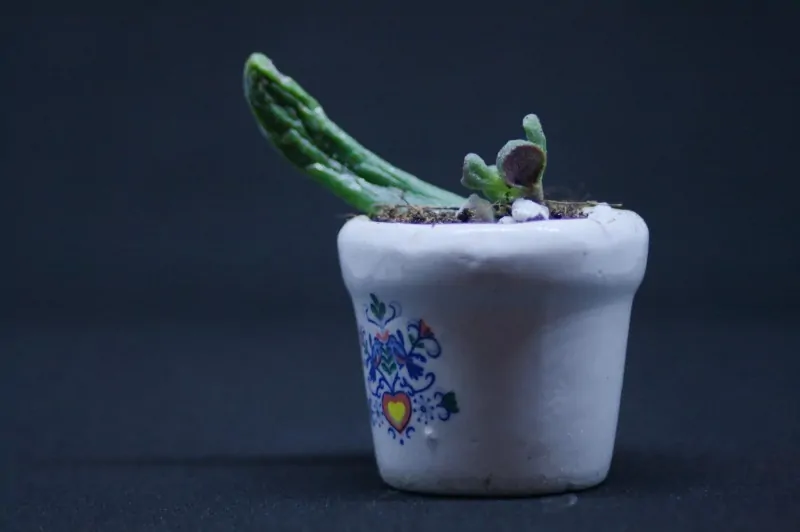
It can be easy to panic if you notice your succulent dropping leaves, especially if you’re new to the ins and outs of growing houseplants. You may also be a beginner in succulent growth and care. If this is the case, you should do your research well. Succulents are not the most pretentious of plants and they require little maintenance overall, but this does not mean you can neglect their needs.
So, did you know that almost all houseplants will naturally shed their bottom leaves while they grow?
These leaves have lost their function, as they are now shaded by higher growth near the crown of the plant. If your succulent is only losing the occasional leaf near the bottom of its stem, there is actually probably no reason to worry.
Associated with: succulent leaves turning brown and crispy.
The plant tends to reabsorb as much energy from the leaves as possible before dropping them, so unless you find this very unsightly, you can leave them on until they fall off by themselves.
Tip: A succulent leaf knocked off the mother plant is not necessarily lost. Succulents are very hardy, and lost leaves can sometimes still be propagated. If you don’t know how to propagate succulents yet, you have come to the right place! Here is what you need to propagate a succulent:
Succulent plant part;
Succulent soil & container (we describe the best types in our article on succulent care);
A sharp knife or pair of scissors (optional, preferably cleaned with alcohol);
Rooting hormone (optional).
Most succulents are naturally found in harsh habitats where they are exposed to plenty of direct sunlight with little surrounding foliage to provide shade. This is why succulents are among the best houseplants that even the most rookie of a gardener cannot kill easily. This doesn’t mean they are indestructible, however.
An enclosed, sunny area like a patio or windowsill can reach scorching temperatures during summertime, leaving your succulents suffering. This is especially problematic if the plant is new and hasn’t had time to adjust to such a hot environment yet.
Associated with: wilted leaves that may or may not have turned a shade of red or orange.
What to do: The leaves drop easily when disturbed. If you see these symptoms, it might be time to move the plants to a more shaded location or improvise some sun protection for them. Should you want a few tips on how to care for succulents and cacti, check out this guide right here. It tells you all you need to know about their needs when it comes to sun/shade ratio, watering, nourishment, pots, and more!
Many beginning succulent growers are surprised to find how hardy some succulents can be when it comes to low temperatures. Select species have evolved to withstand temps around or even below freezing! Most don’t respond well to frost at all, though, and a few digits below freezing can already cause trouble. For instance, if you grow an Aloe Vera plant, make sure it gets at least 6 hours of sunlight a day!
Associated with: succulent leaves drooping and turning black before dropping.
What to do: If you see this happening the damage has already been done, and all you can do now is try to control it.
Move the plant to a more protected location that isn’t too drastically different in temperature. From outside to a garage would be a good option: from outside to a warm place like your living room is often too extreme.
If you have to keep your succulents outside during cold weather, keep in mind that watering is absolutely out of the question during frost risk. The plants have the best chance of surviving when kept bone dry.
We all love our succulents, but it’s important not to love them to death. Overwatering is one of the main causes of succulent leaves falling off, as excess water causes the leaf’s cell walls to swell to the point of bursting. Before you begin growing succulents or cacti, do thorough research on their care.
I have heard stories about people watering their cacti into some massive bath sponges that eventually broke under their own weight. So to help you start on the right foot, here is a comprehensive Aloe Vera plant care guide and a Jade Plant care guide to help you understand how to approach succulents.
Associated with: succulent leaves turning soft.
This is somewhat confusing because an underwatered succulent leaf can also seem slightly soft and squishy. The yellow coloration on the leaves is a dead giveaway, though, as are signs of root rot when you lift the plant out of its pot.
What to do: Your succulent can still recover in most cases. Reduce watering and read up on proper succulent watering practices.
You should never add more water before the plant’s soil has gone entirely dry, which takes different amounts of time depending on how much light it receives and the size of its root system.
Drainage is critical, so always grow your succulents in a gritty soil mix and a pot with a drainage hole on the bottom.
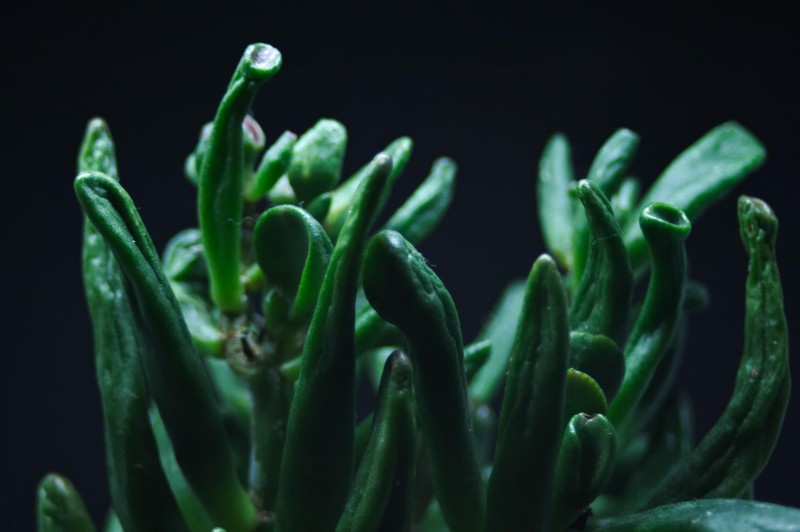
Although overwatering is a much more common cause of succulent leaves falling off than underwatering, the latter does happen.
If you forget your outdoor succulents during a few hot days, you might find them looking quite sad by the time you arrive with the watering can.
Associated with: succulent leaves shriveling.
An underwatered succulent will scream for help with soft, shriveled leaves. Contrary to overwatered leaves, there is little change in color to be noted. The leaves will fall off at light touch, and ones that are too far gone will continue to shrivel and brown despite the plant being watered.
Wrinkled, shrunken leaves are a tell-tale sign of underwatering in succulents.
What to do: Unless you’ve severely underwatered your succulent, it will usually bounce back. Remember to keep a closer eye on it next time. A single sunny day can dry the soil in a small pot dramatically!
If you want to find out more about how to keep your succulents alive and happy, check out Florina’s complete guide to cacti and succulents care!
Since you are here, it means that you have one or two succulents you want to offer the best of care. Let me show you this guide on some of the most awesome types of succulents you have ever seen, maybe you decide to adopt a few more of these gorgeous babies into your home. After all, the love for succulents is something to share!
Finding fallen leaves around your succulent’s pot is alarming, but in many cases, the plant can be rescued with small adjustments in its care. After all, it would be a shame to lose any of those gorgeous flowering succulent plants you love so much!
To resume, and answer the question of why are succulent leaves falling off, here are the main reasons:
My advice for you is to study the fallen leaves and retrace your steps to figure out where things went wrong. Just don’t take any drastic actions: slow and steady are the keywords when it comes to caring for all houseplants!

Monthly updates on your favorite plants and how to keep them alive, delivered straight to your inbox!
Privacy Policy
This privacy policy outlines what info we gather from our visitors and contributors, the tools we use to collect, store, and protect it, and how we use this information.
Like any other website on the World Wide Web, YouHadMeAtGardening.com records some info about you and your device during your visit. This privacy policy outlines how our team gathers, stores, protects, and uses the information it gathers from visitors of the YouHadMeAtGardening.com website.
By continuing to use this website, you implicitly agree to this policy; if you do not agree to some or all of the procedures listed on this page, you can opt out at any time, however, you might not enjoy the intended browsing experience.
Our team reserves the right to alter this privacy policy with no prior notice to you. However, if the alterations made affect your personal data in any way, you will be notified immediately by email, on our homepage, or here.
Information YouHadMeAtGardening.com Collects
Our systems gather personally and non-personally identifiable information from visitors of the YouHadMeAtGardening.com website.
The only personally identifiable information we collect is your name and e-mail address only when leaving comments if you’re a visitor, or when submitting content and leaving comments, if you’re a contributor.
However, if you are not comfortable with providing your personally identifiable information to us, you can also use an alias instead of your real name and e-mail address without breaking any rules or regulations currently in use.
Note: If you submitted a comment using your personally-identifiable information and want it removed, you can always contact us and we will remove your info in 30 days.
The non-personally identifiable information we collect is your IP address, ISP information, device and browser info, and your browsing patterns – specifically the pages and websites you visit. This information cannot be used to track down your identity.
How We Collect Your Information
We use the following tools to gather personally and non-personally identifiable information from visitors and contributors:
• Cookies: these tiny text documents contain unique identifiers that are stored in your computer after your expressed consent. Cookies collect non-personally-identifiable information about your browsing patterns, which helps us pinpoint the areas of our website that require extra work and the areas that fully meet your needs.
• Log files: These tools record browser and device information, browsing patterns, websites that referred you to the YouHadMeAtGardening.com website, pages our website referred you to, and other types of non-personally identifiable information.
• Sign-up forms: these requests only come up when registering for our newsletter and is the only way our team collects personally-identifiable information from visitors.
How We Protect Your Information
All information we gather, both personally and non-personally identifiable, is stored in systems and databases managed only by the YouHadMeAtGardening.com team. We use the latest security measures to make sure the information you provide and the information we gather stays confidential, such as encryption, user behavior monitoring, and a series of managerial procedures.
How We Use Your Information
We only use your personally and non-personally identifiable information to improve the quality of the website and your browsing experience while here. We want to know which pages and sections of our website satisfy your needs and are of real value to you and which ones need improvement so we can make the proper adjustments. We also use your information to make sure the website is properly displayed on your device and browser.
If you choose to opt in for our newsletter, we will also use your information to keep in touch.
However, know that the YouHadMeAtGardening.com team will never share your information with other parties in exchange for financial rewards or any other kind of benefits. Some third parties might get very limited access to your info, but only to your non-personally identifiable information and only as we described above.
The personally identifiable information you provide is strictly confidential, therefore we will not share it with anyone.
Advertising
This Site is affiliated with CMI Marketing, Inc., d/b/a CafeMedia (“CafeMedia”) for the purposes of placing advertising on the Site, and CafeMedia will collect and use certain data for advertising purposes. To learn more about CafeMedia’s data usage, click here: www.cafemedia.com/publisher-advertising-privacy-policy